
I played football over the weekend and broke my Meta Ray-Bans (ouch!), but hopefully learned some lessons.
Most of my career has been spent in startups. As a startup founder, you get used to doing whatever the moment demands. One day you’re fundraising, the next you’re hiring, and the day after that you’re closing a sale. When something is on fire, you don’t ask whether it falls within your role. You run toward it.
Growing up in that chaos gave me enormous respect for generalists—for people who can enter messy situations, create clarity, and get things moving. It also shaped my management philosophy: hire the best people I can, give them context and autonomy, and trust them to figure things out.
But over the last few months, I’ve developed a new respect for structure. Here’s a personal anecdote from this weekend that helped crystallize some of these thoughts.
Chasing the ball
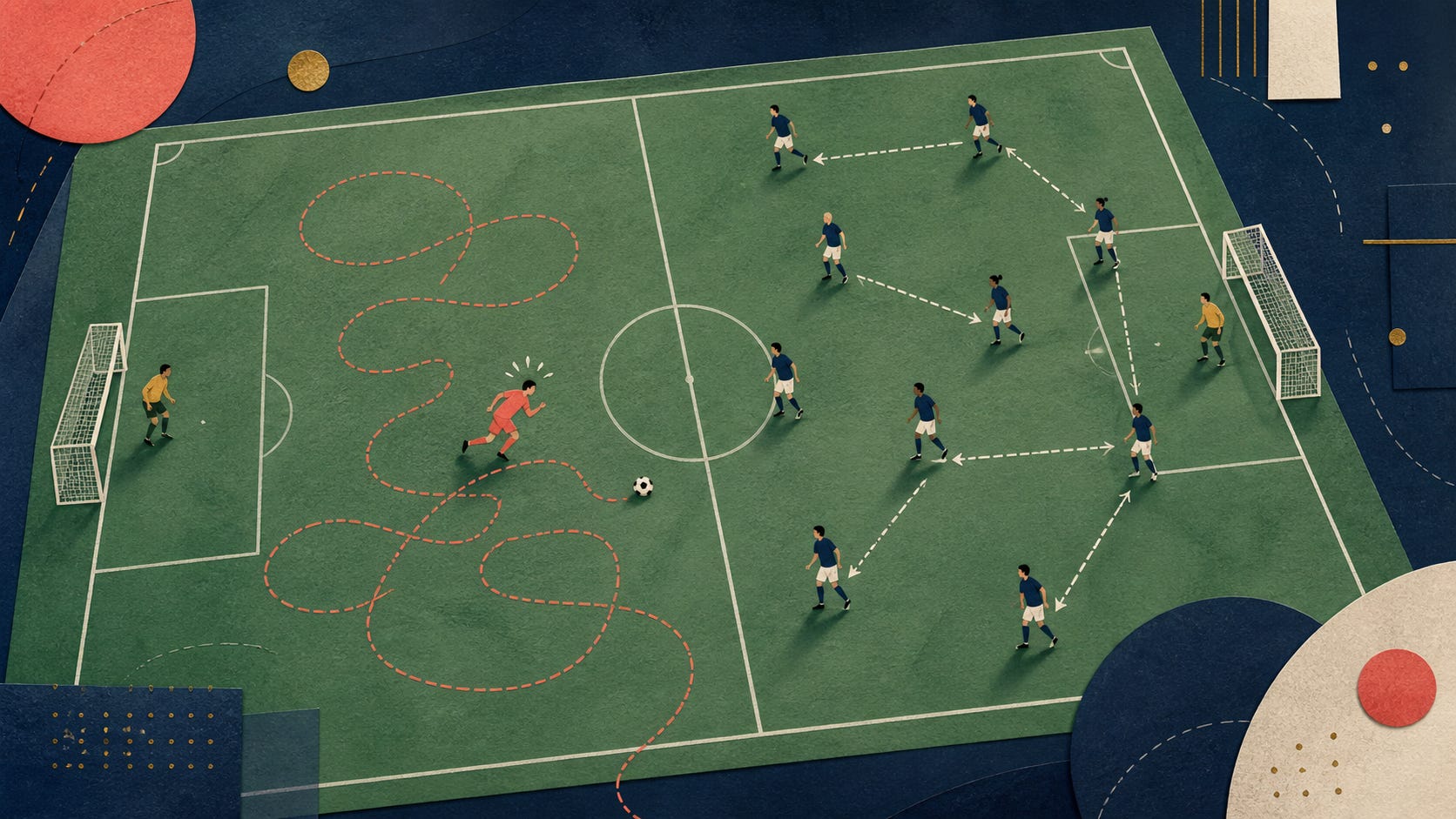
I played football this weekend. I’m terrible at it. I chased the ball everywhere on the pitch. Wherever it went, I followed, trying to defend. As it turned out, I was getting tired much faster (no surprise there!). I also felt that the opposing team was playing much better than we were and clearly winning! Everyone on that team knew where they were supposed to be and could almost make blind passes because they knew where the other player would go after passing the ball.
A team needs a shared approach
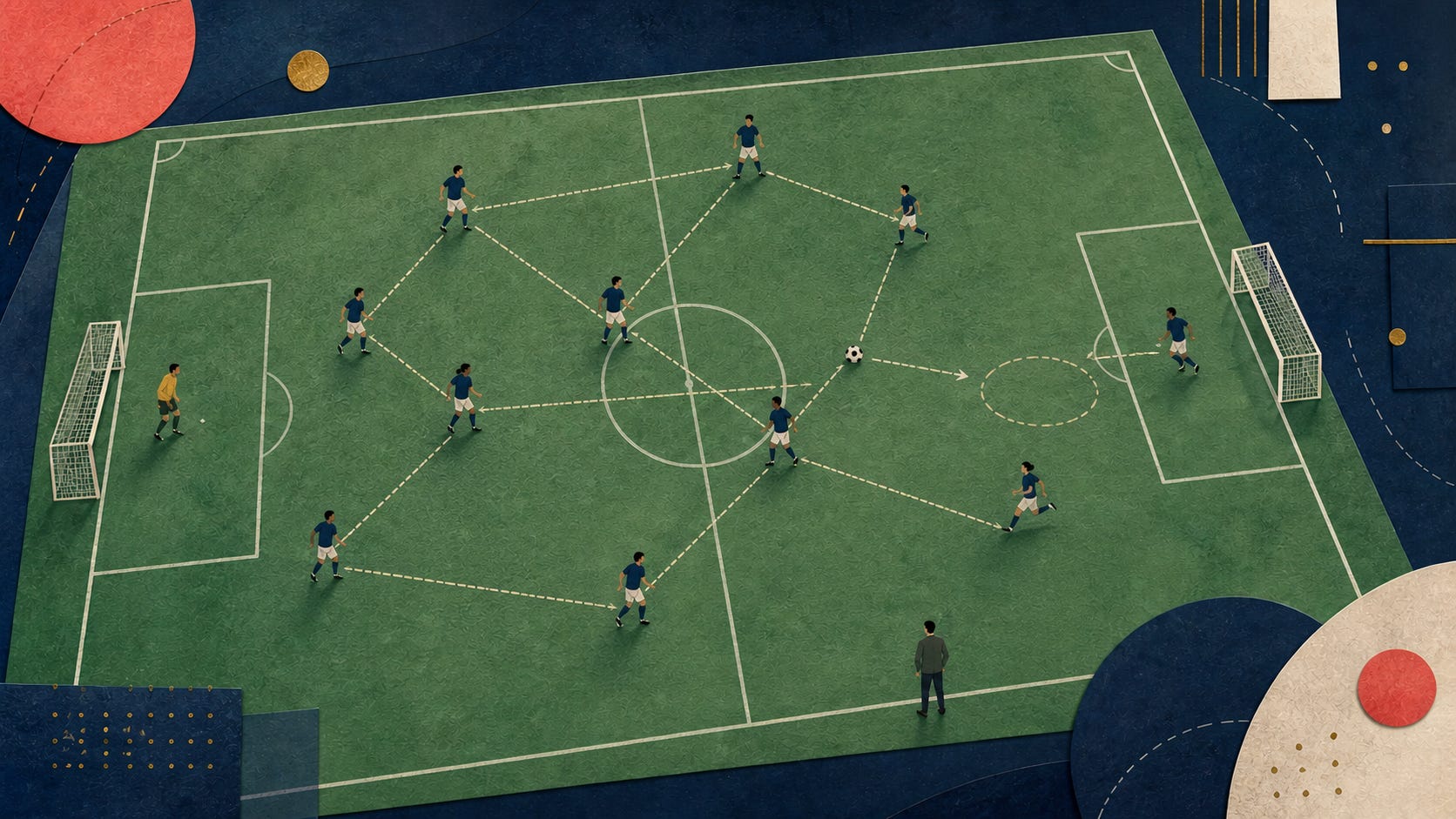
This morning, I came across the trailer of “Mourinho”.
To play in Mourinho’s team, every player has to trust the system. This is so important because without that trust, no one will remain in their own position. Every player on the football team will have an opinion on how the team should play. But what matters more than the individual’s genius opinion is that every player on the field knows what every other player is going to do (so that you can make blind passes knowing that the player is going to be there).
Hence, everyone on the team needs to value a jointly agreed-upon approach (led by Jose Mourinho, in this case) over their own preferred approach.
The most visible player is not always the most valuable
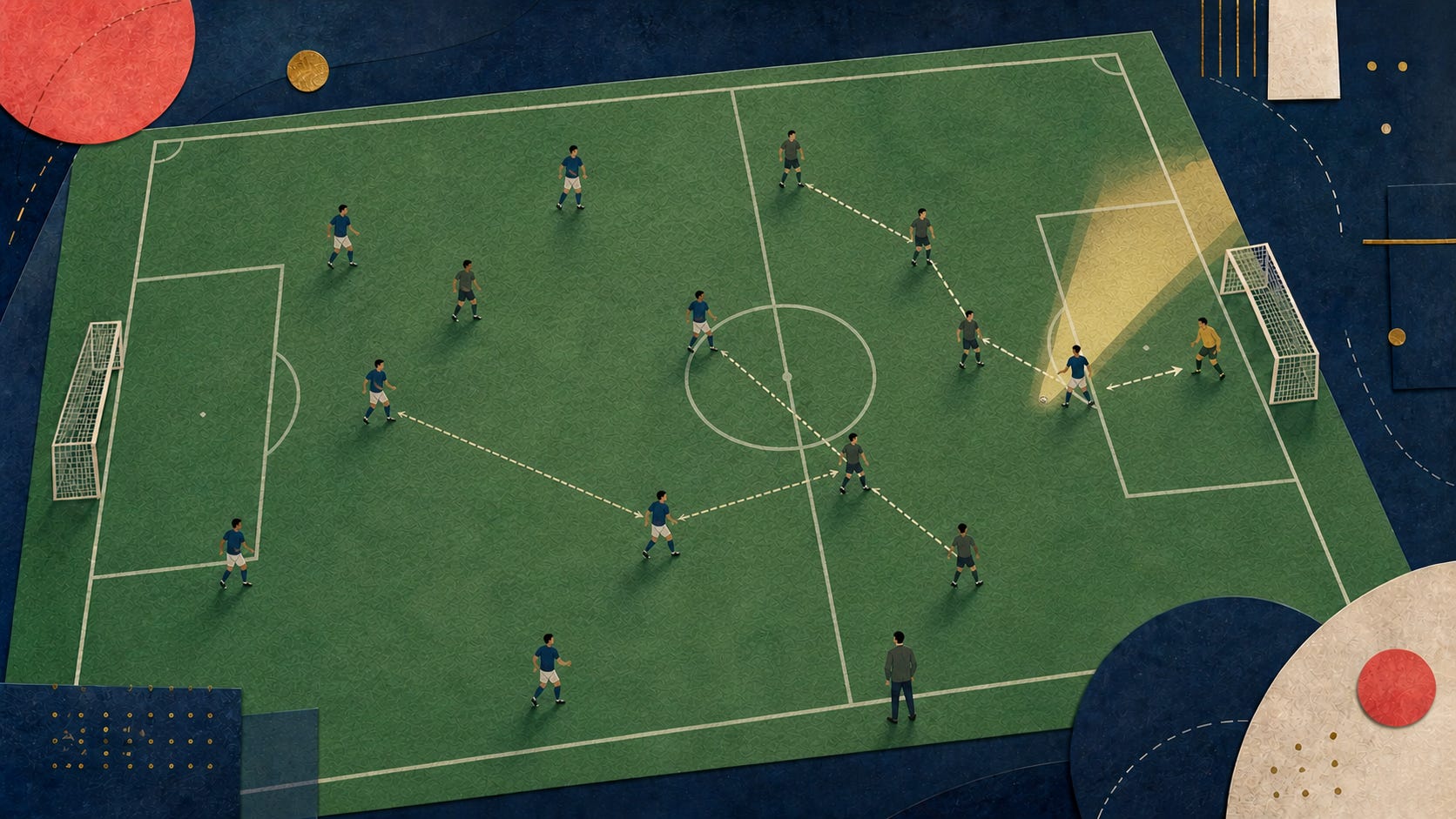
People from the outside tend to value certain individuals more than others. If you just follow the World Cup once every four years, you’ve probably just heard of Ronaldo, Messi, Haaland, and Mbappe. Strikers do tend to get the glory. But if you watch every football game, you know that without a Kevin De Bruyne, a Rodri, a Toni Kroos, or a Luka Modric, your best strikers struggle badly! Man City’s season was a perfect example of this when Rodri was injured. In front of the execs, someone might get the glory. But someone much closer to the team would know its inner workings and understand why it’s almost never about that one person performing.
Holding shape does not mean refusing to help
Holding shape does not mean refusing to help outside your job description. In football, the best defense often begins at the top of the pitch: when possession is lost, forwards and midfielders immediately help win it back. The principle is to cover the spaces adjacent to your role without abandoning your own position whenever another part of the field has a problem. Help solve the problem, irrespective of whether you or your teammate made the mistake.
Structure does not eliminate improvisation
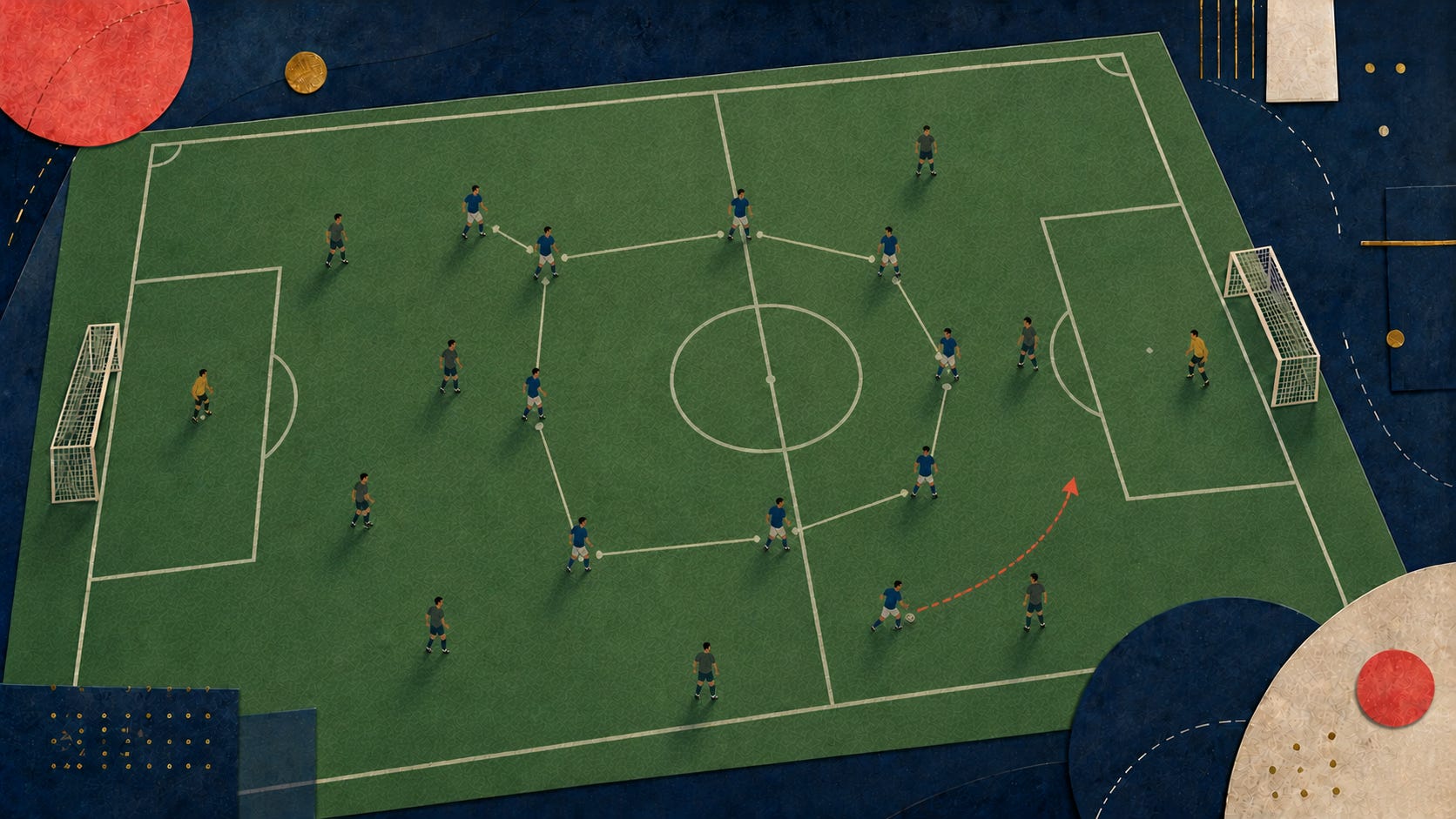
As it turns out, if most of the football team is holding the shape, sometimes you need one or two people in the team to have the freedom to break the shape. Maybe they overload some areas, maybe they do something very unpredictable that breaks the structure or plan that the opposition has. At Man Utd, it was Bruno Fernandes (an offensive midfielder). The lesson is that it’s important that 90% of the team is holding the shape, but it’s also important to have one or two people in the team who are free to break the shape and be truly in the “founder” mode. The person breaking the shape is not necessarily more exceptional, more important, or more valuable. They simply have a different role in that moment, and their freedom works only because everyone else maintains the structure. If everyone claims the freedom to break shape, there is no shape left to break.
Summary
A more functional team where people in the org trust each other usually wins.
Every person knows what they are supposed to do.
People on a highly functional team work much less than people on a less functional team.
Brilliant write up ! Great insights especially about holding shape with a couple of players having the flexibility to try something new and explore. Wonderful parallel to how organisations work best.
👍👌