
I spent the day playing with Claude’s new interactive apps (Figma, Asana, the works). Here’s what I actually think is happening, and why the press coverage is missing the bigger picture.
The Bigger Announcement: MCP Apps
The headline today is “Claude can now embed Figma and Asana.” But the more significant news is buried in a separate MCP blog post: MCP now has official support for UI components.
This matters because MCP Apps standardizes how interactive UI patterns work across all chat interfaces: Claude, ChatGPT, VS Code, Goose, and whoever else adopts MCP. One SDK, multiple platforms. I’ve been playing with Shopify’s MCP-UI for the last few months, and it’s great to see this paradigm being standardised across the industry.
Here’s a thought experiment: imagine if Google and Apple had aligned early on a shared framework for how mobile apps operate. Developers wouldn’t need to maintain both Android and iOS versions. That’s essentially what MCP Apps is attempting for AI chat interfaces. Will it sustain as platforms grow? Maybe not; someone big enough might eventually fork. But for now, this is the closest thing to utopia we’ve seen in this space.
For anyone building similar interfaces (like we are at Adobe), this is a stronger foundation to build on. The technical spec is worth reading.
The Apps Themselves: Mostly Leads, Not Products
I tried several apps today. My honest take: they’re still mostly useless for real work.
Good ideas? Yes. Likely to get adoption? Probably not in their current form.
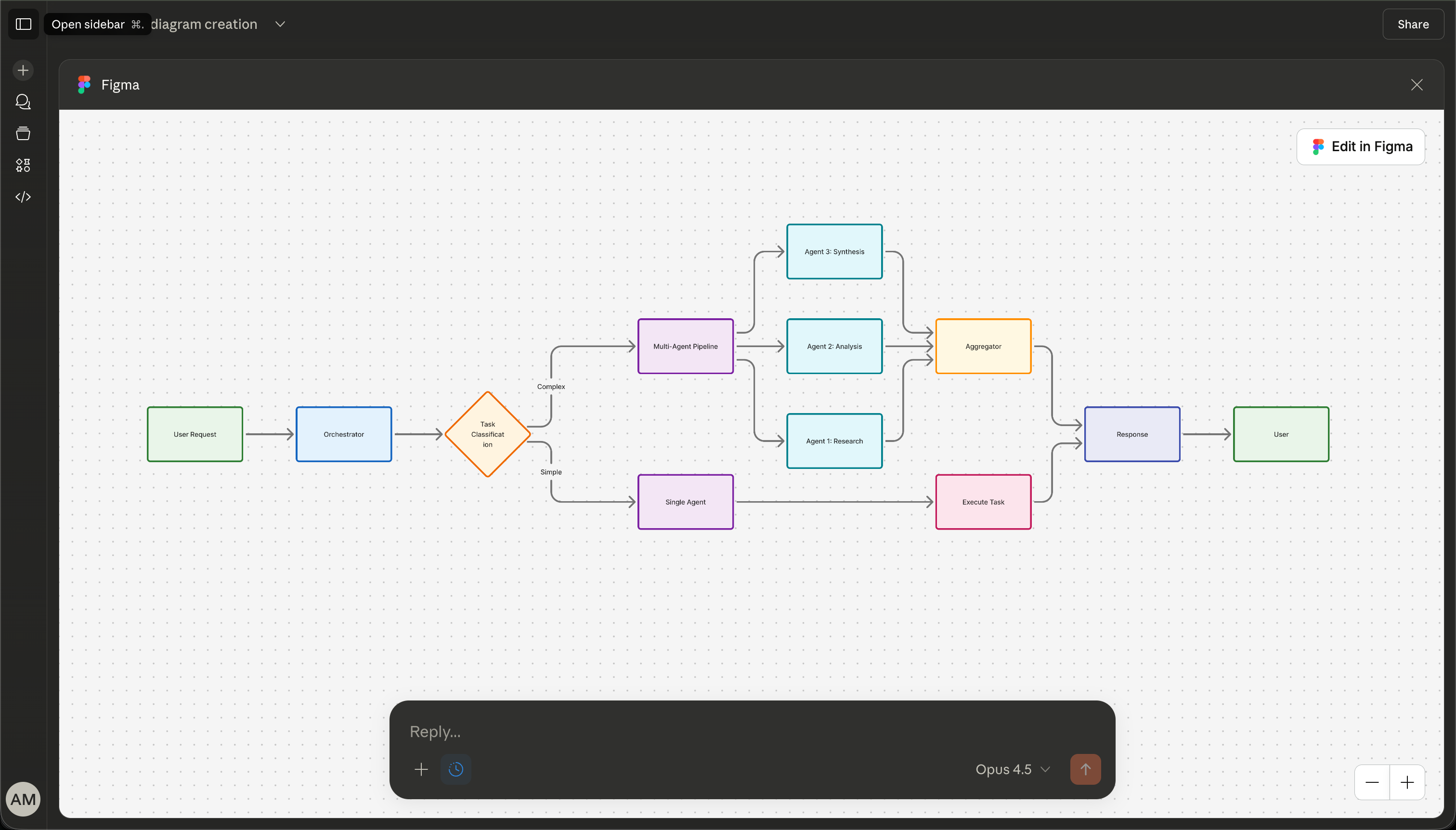
Here’s what’s actually happening: these embedded apps function as lead generation for the SaaS companies. Users start a task in Claude (maybe drafting an Asana project or sketching in Figma) but can’t finish. I don’t even think people get 50% of their work done before needing to jump to the native app. More realistically, it’s 10–20%. Just as one example, I created a Figma board from a single prompt. That’s magic. But I can’t even edit a single text box within this interface, and I need to go to Figma’s interface for that.
Why? Three possibilities:
Rushed releases. Maybe app companies just needed something to feature in Claude’s launch video. Ship fast, polish later.
SDK immaturity. The MCP Apps SDK might not yet support the depth needed for real workflows. iOS and Android SDKs took years to mature; maybe MCP Apps hits its stride by mid-2026.
A creativity/skill gap. Perhaps Anthropic or OpenAI themselves need to build reference apps that demonstrate what’s actually possible. Show the industry how it’s done.
Note - I think analytics apps are an exception to this rule. It’s the true “secondary app” for most people, and as the CEO of Amplitude says, very few people want to keep logging in and learning about analytics apps. It’s an interesting thought exercise which other apps fall in this bucket. Spenser Skates@spenserskatesThis is the future of analytics. Ask Claude a question about user behavior, get an interactive chart response, change the chart within the chat, and then continue chatting with Claude. Here's a demo:10:54 PM · Jan 26, 2026 · 3.43K Views1 Reply · 3 Reposts · 27 Likes

Two Harder Problems
Even if those issues get solved, there are structural problems that might be more fundamental.
Problem 1: Misaligned incentives
What’s the incentive for Figma to build an amazing Claude integration?
Take the extreme case: if an embedded Figma app is so good that 99% of users can complete their work inside Claude, how does Figma make money? And even if they solve that, it’s only a matter of time before Anthropic and OpenAI bake those capabilities into the platform natively, just like platforms eventually absorb the best third-party app features.
Problem 2: Claude/ChatGPT isn’t a primary app (for most people, yet)
This might be the bigger issue. ChatGPT (and Claude) are still secondary apps: things you tab into, not things you live in.
It almost always makes more sense to embed AI into the apps where people already spend their time. I’m far more likely to use AI features inside Slack (if the Slack bot becomes truly great) than to use ChatGPT to send a Slack message. For a designer, Figma is the primary app; Claude is the assistant.
So for these embedded apps to really work, Claude and ChatGPT first need to become destinations where people spend hours getting real work done. Right now, they’re assistive: you visit, get help, leave.
The good news: this might just be an “industry early” problem. Claude Code has arguably already crossed this threshold for developers. It’s become a primary tool, not a helper. Claude Cowork is an attempt to generalize that to everyone else, though I’m skeptical it’ll work in its current form.
What Would Actually Work
Here’s what I think would change the game: if OpenAI ships the workspace product they’ve reportedly been building (something that competes directly with Google Workspace and Microsoft Office) that could turn ChatGPT into a primary app. And then building apps on top makes sense, with real adoption potential.
Anthropic seems to understand this. Claude in Excel works because Excel is already a primary app. You’re embedding the assistant where people already are, not asking them to come to you.
The apps launched today are interesting experiments. I would love for them to play out soon! But I don’t think they are ready for prime time today.
Deeply appreciate this perspective. Great read !